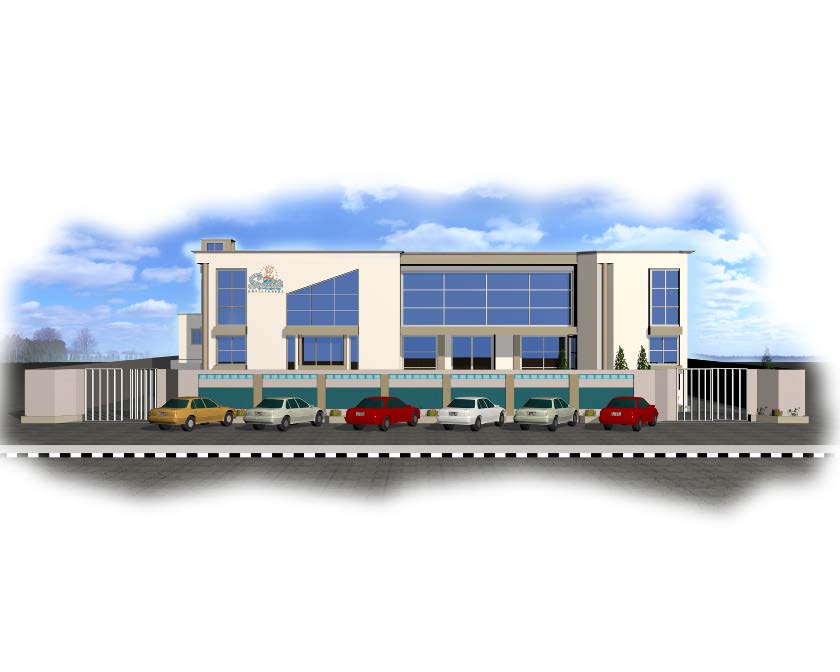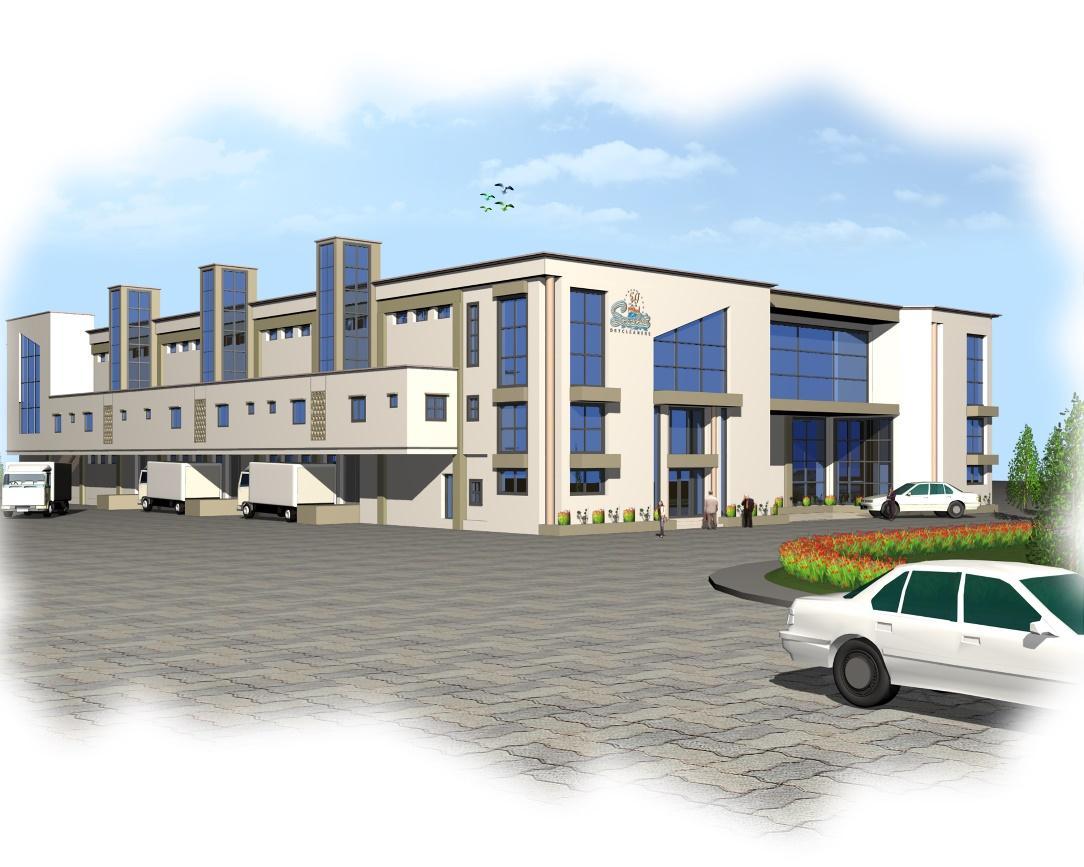



Snow White Factory
Located in the industrial area of Korangi township sector 48 in Karachi, the
proposed factory of the Snow-white Cleaners by the Peak architects and consulting Engineers was constructed in the late August of year 2005.
The masterplan shows a plot of 1 acre that is divided by two entrances at two ends of the plot for the labor and executives respectively. The main entrance to the building opens into a wide open hall which allows multiple functions performing at a single time. The factory is built on grids allowing perfect division of areas according to the capacity required for the activities functioning such as pressing (delivery, packing and folding), (collection, sorting and marking) and washing area.
The factory is a very good example of circulation techniques demonstrated inside and outside
the built area. Multiple entrances are provided for the laborers and staff of the desired department to their respective areas inside the building. A total of five staircases can be seen on the ground floor for different users out of which three can be used on the mezzanine floor and others to the first floor. Centrally placed stair for the staff leads to the mezzanine which covers an overall half of the left part of the ground floor, allocating their offices, common rooms and other functions. A 30 ft wide corridor separates the main building with the built areas at the rear and left side of the plot carrying carpet related functions and storage areas respectively. This corridor also allows vehicles to move in and out and rest at the check post while the 3 platforms provided with 3 cargo hoists at equal intervals make the transferring of heavy items less of a hurdle.
The building relates strong visual harmony as the mezzanine part that is cantilevered at 10 ft aligns with the 3 cargo hoists forming a solid a mass while these cargo hoists which protrude out firmly in rectilinear positions continue to jut out vertically parallel to the building. The use of simple materials on the exterior (glass and concrete/plaster) with basic colors of gray, beige and white compliments the specific function of the building being a factory as well as the decisive line and strong form of the building.
(Ar. Zainab Shabbir )